I Spent 21 Nights Wearing The Japanese Patch My Friend Wouldn't Stop Talking About — And I Don't Recognize My Mornings Anymore
By night four, I stopped fighting my jeans on. By week three, I caught my reflection in a window and didn't look away. This is what nobody tells you about the herbal patch quietly going viral — and what six years of trying everything else did to me before I found it.

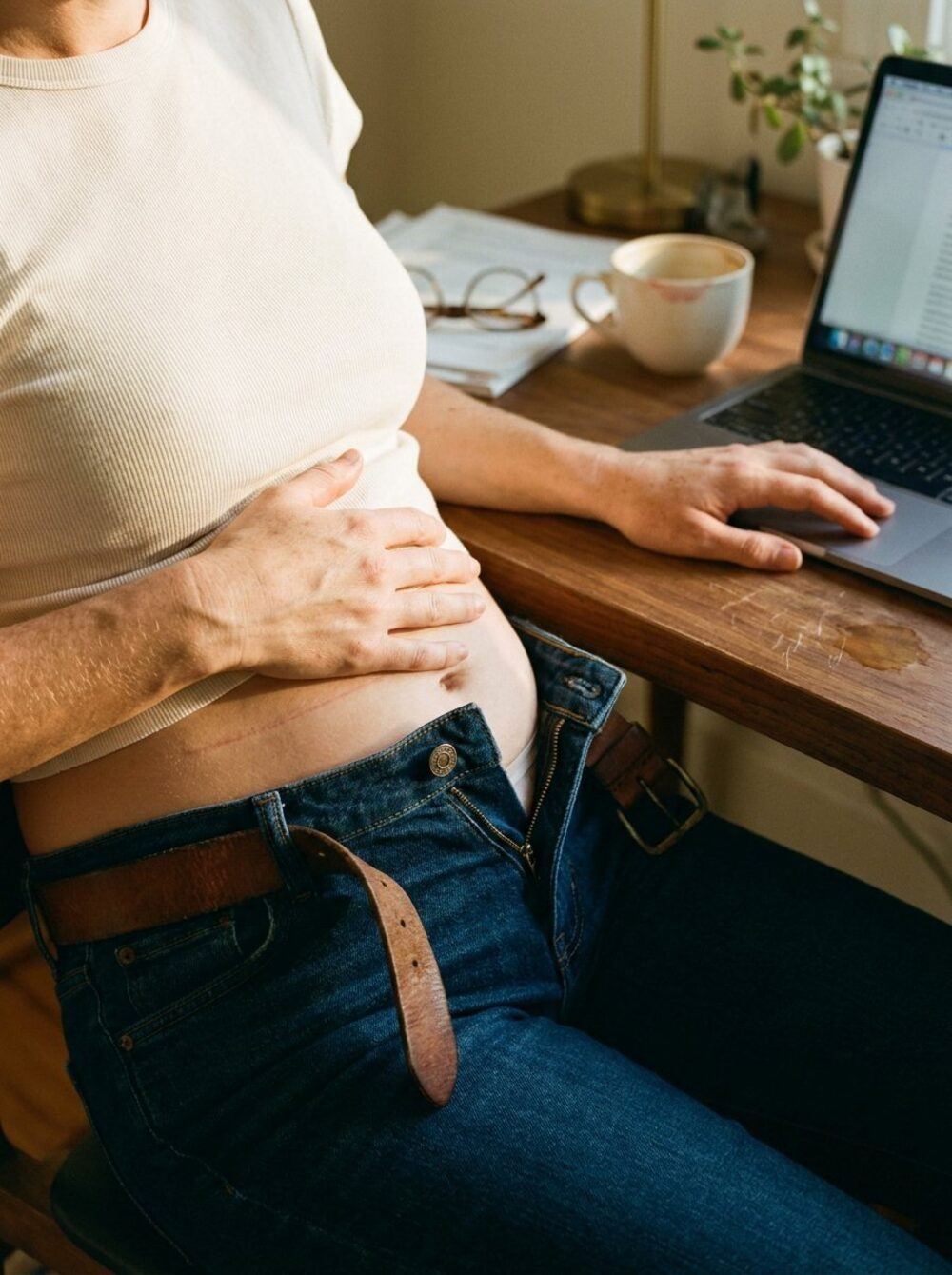
I'm going to tell you something I've never said out loud, because I'm not sure I'd survive saying it to a real person. For the last six years, I have been quietly at war with my own body. Not in a vague, complicated way — in a daily, grinding, specific way. I wake up okay. I put on jeans. By 11am I'm already adjusting them under my desk. By 4pm I'm unbuttoning the top button when nobody's looking. By the time I get home, I'm changing into sweatpants the second the front door closes. My husband stopped asking why a long time ago. I think he's afraid of the answer.
I'm 32. I have a desk job and a master's degree and a kind partner and a life that, on paper, should make me happy. And every single afternoon, I sit at my desk and hate the body that's holding me up. That's the part nobody writes about. That's the part you don't even tell your sister. That you can be a successful, intelligent, well-loved woman and still spend most of your day quietly negotiating with your stomach about whether you're allowed to eat lunch.
I've tried everything. I'm not exaggerating. Probiotics. Cutting gluten. Cutting dairy. Cutting carbs. Three liters of water a day. Sixteen-eight fasting. The expensive teas with the influencers' faces on the box. Two different gut tests. A nutritionist for nine months. A six-week protocol that cost more than my rent. None of it changed the fact that my body felt like a stranger I was renting and couldn't return.
So when my friend Mara texted me a photo of these little herbal patches she'd been wearing under her clothes — some Japanese-inspired thing her sister-in-law swore by — I almost didn't reply. I'd been burned too many times. I'd hoped too many times. I was so tired of hoping I could feel it like a weight in my chest. But I was at my desk, the top button of my jeans was already undone, and I bought a box anyway. Two boxes, actually. Out of pure spite. Out of the kind of stubbornness you only have left when you've stopped expecting anything to work.
Three weeks later, I'm sitting at my kitchen table at 9pm wearing real pants. Not sweatpants. Pants with a zipper. And I haven't unbuttoned them once today. And I cried in the car on the way home from work because I realized I hadn't thought about my stomach in nine hours.
Nine hours. That's how long it had been since I'd gone nine hours without thinking about my body. I hadn't realized that wasn't normal until it stopped being my normal.
This is what happened. I'm writing it the way I wish someone had written it for me before I bought it. Nothing exaggerated. Nothing left out.
Chapter OneThe 3PM bloat is real — and I'd been blaming myself for years
I want to tell you about all the small things I'd quietly given up before I even noticed I'd given them up.
Tucking shirts in. Wearing bodycon dresses to weddings. Sitting cross-legged on the floor at my niece's birthday party. Letting my husband put his hand on the small of my back when we walked into a restaurant. Standing in profile in photos. Hugging people for more than two seconds. Wearing the bikini I'd bought in 2019 that still had the tags on it. Ordering whatever I actually wanted at lunch. Taking my coat off at parties. Going swimming. Staying out past 8pm without fantasizing about the moment I could change into pajamas. Eating dinner with my husband without secretly wishing he'd just go to bed already so I could be alone with my body.
None of those things happened all at once. They left one by one, so quietly I didn't notice the room emptying. By the time I looked up, six years had passed and I was a woman who had organized her entire life around a stomach that didn't feel like hers.
I always assumed it was my fault. That I was eating wrong. That my body was punishing me for the bagel at breakfast. That if I just had more discipline, more willpower, more character, I would stop puffing up halfway through the day like a balloon nobody warned me about. I sat through years of believing I was broken. I read the books. I downloaded the apps. I took the supplements. I cried in the bathroom at work more times than I can count, holding my stomach and wondering when this stopped being a body and started being a problem to manage.
It isn't food. Not mostly. The actual culprits are sitting for hours, slow digestion, stress hormones doing their thing in the background, and a salty lunch that compounds it all by 3pm. Nothing about this is a moral failing. Nothing about this is something you fix by being "better." It's biology, and most of us have been blaming ourselves for it our whole adult lives.
That's the part that made me cry first, before any of this even started working. Just reading those sentences. Just realizing I'd spent six years apologizing to my husband for a body that wasn't doing anything wrong.
"I unbutton my jeans at my desk by 4pm every day. I just thought that was the price of being a woman with a job." — Me, three weeks ago
What I wanted wasn't a transformation. I wasn't trying to lose weight. I wasn't trying to "snap back." I wasn't trying to look 22 again. I just wanted to make it through a Tuesday without secretly hating the body that was holding me up. I wanted to wear jeans on a date night with my husband without spending half of it thinking about my waistband. I wanted to come home, take my coat off, and not have it be the worst part of my day.
That was the entire bar. That's how low I'd let it get.
Chapter TwoThe Japanese ritual quietly going viral on TikTok
The patches are based on a tradition of applying herbal blends to the navel and abdomen — a practice that's been part of East Asian wellness for generations. My grandmother used to make poultices for my mom when she had cramps. This is the modern version of that. Small. Adhesive. Discreet enough to wear under clothes. You stick it on clean, dry skin around your stomach. You leave it there. That's the whole instruction.
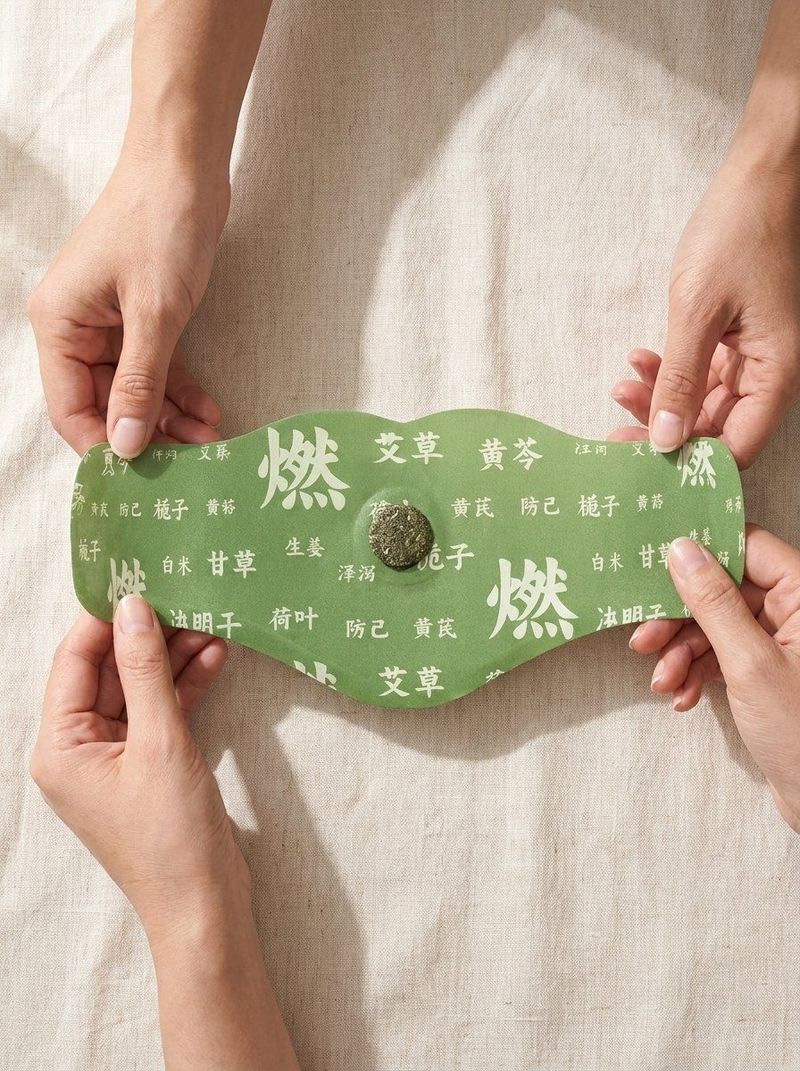
I'd seen a hundred versions of these on Amazon. They all use almost the exact same wording in their listings — "plant-based balance patch," "Japanese-inspired comfort," "gentle herbal formula." After a while it started to feel like the entire category was one product with different boxes.
Spoiler: it's not. Most of them genuinely don't work, and I'll get to why in a minute. But the format itself — a topical herbal patch you wear overnight — is doing something the supplements and the teas and the apps and the protocols weren't doing for me. After six years of feeling like I was screaming into the void about my own body, something finally answered back.
Chapter ThreeHow it actually works (you'll feel it in about ten minutes)
I want to be honest about my expectations going in. They were zero. Worse than zero. They were that specific kind of negative expectation you only develop after years of being disappointed — the kind where you almost want something not to work, because at least then you don't have to feel the sting of being hopeful again.
I applied the first patch on a Sunday night. I remember it clearly because I picked a Sunday on purpose. I figured if it didn't work — and I was certain it wouldn't — at least I'd have the rest of the week to forget about it before my next round of self-loathing on Tuesday afternoon. That's the math you do when you've been hoping and losing for six years. You schedule your disappointments.
I sat on the edge of my bed in a t-shirt and underwear, peeled the backing off, smoothed it onto my stomach, and got under the covers. Then I waited. Already preparing the eye-roll for myself in the morning.
About ten minutes in, I felt something. A real, distinct, gentle warmth right under the patch. Not heat. Warmth. Like someone had laid a hand on my stomach and just left it there.
I held my breath. I didn't move. I was so sure I was imagining it that I sat very still and tried to talk myself out of it. You want it to work, that's all. You're projecting. You're so desperate you're inventing sensations. So I did something kind of sad in retrospect: I peeled the patch off. The warmth stopped. I put it back on. The warmth came back.
That was the moment. That was the moment I started crying.
Not because of the patch, exactly. Because of how badly I'd needed something — anything — to feel real. Because of the six years of trying. Because of the part of me that had quietly given up on my own body ever doing anything but disappointing me. Because someone, somewhere, had made something that was actually doing something, and I'd been so prepared to be let down again that I almost couldn't let myself feel it.
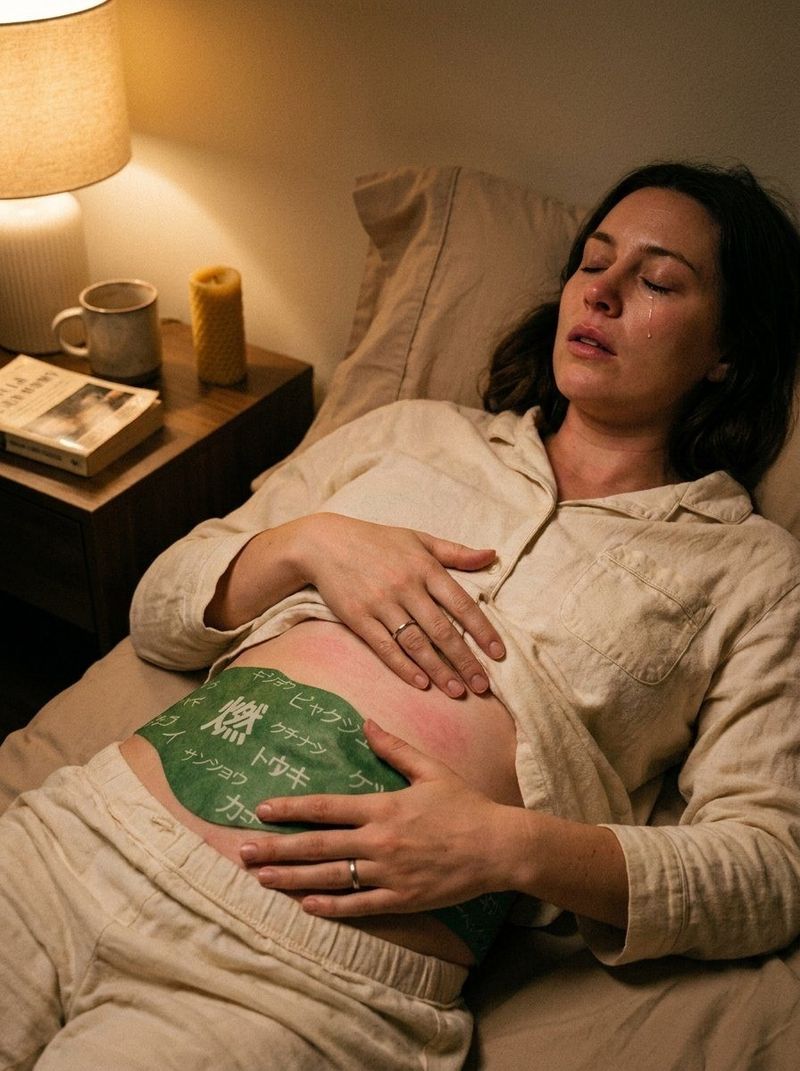
That sensation matters more than I expected, and not just for comfort. When you've been disappointed enough times, your brain gets very good at shutting down hope before it can hurt you again. The warmth is what slipped past my defenses. I couldn't talk myself out of feeling it. And that meant — for the first time in years — I had to let myself believe something might actually be happening.
By hour two of that first night, my stomach felt softer and looser than it had felt in years. I went to bed thinking maybe I'll wake up disappointed. I'd been training for that.
I didn't wake up disappointed. I woke up at 6:47am, a few minutes before my alarm, and I lay there for a minute with my hand on my stomach, and I noticed it — flat, settled, mine — and I started crying again, quietly, before I'd even gotten out of bed. My husband asked if I was okay. I said yes. I didn't know how to explain it without sounding like I'd lost my mind.
One small thing I want to be honest about: the herbal smell took me a day to get used to. It's not perfumey. It smells like a real herbal apothecary — earthy, slightly bitter, definitely Eastern. By day three I didn't notice it at all. By day seven I'd started to associate the smell with the feeling of finally getting my evenings back, and now I almost like it. It smells like the thing that gave me my body back.
Chapter FourWhat's actually inside the good ones
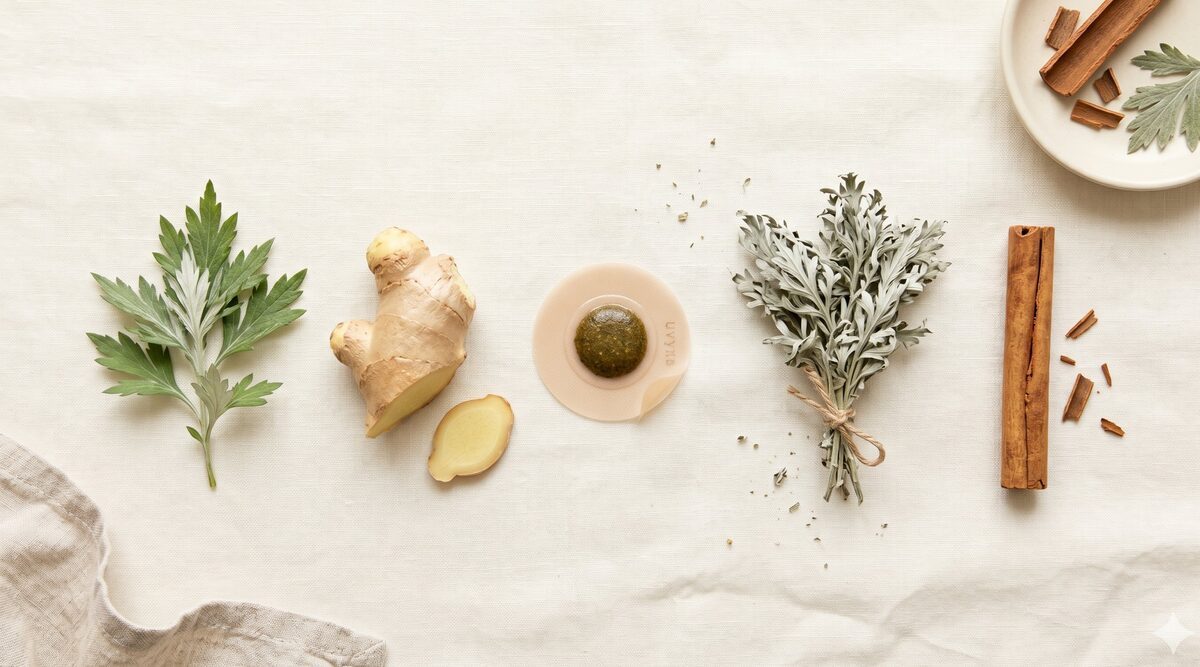
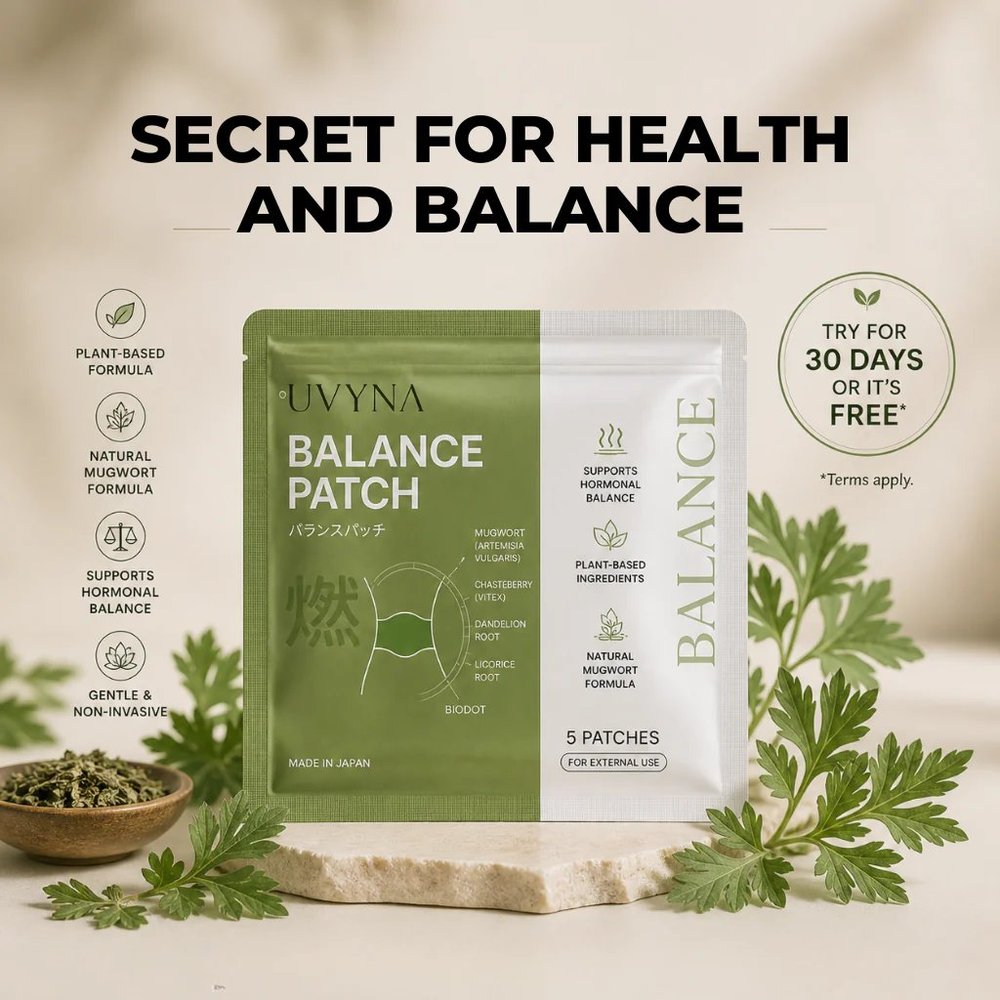
Once I knew the format worked, I went deep into ingredients. Most of the cheap patches don't tell you what's in them, which should be a red flag. The version I ended up sticking with uses four traditional Japanese botanicals, all named on the box:
Mugwort (Yomogi)
The root botanical of the blend. Long history in Japanese herbal practice for easing abdominal heaviness and warming the lower body overnight.
Ginger Root
Calms digestive tension and supports a settled feeling after meals. Works alongside the mugwort to gently warm the area where the patch sits.
Wormwood
A bitter herb with a long history in digestive support, used here to encourage that natural sense of evening ease.
Cinnamon Bark
Brings warmth and a touch of comfort to the blend. Pairs naturally with the ginger to support a relaxed, balanced feeling through the night.
Just as importantly: no synthetic fragrance, no parabens, no phthalates, no latex, no mystery fillers. Skin-safe adhesive. Individually sealed so the actives don't dry out before you open them. These are the small details that separate a real herbal patch from a sticker that looks like one.
Chapter FiveWhy most patches on Amazon don't work (and what's different about the ones that do)
I went down a rabbit hole reading negative reviews on competing patch listings before writing this. The complaints are remarkably consistent. If you've tried a patch that didn't work, this is probably why:
- The adhesive is cheap and falls off Reviewers describe patches that won't stay on through a normal day, let alone overnight. If it falls off in the first hour, you're not getting any of the benefit.
- You don't feel anything at all The warming sensation is supposed to start within minutes. If a patch produces no sensation, the herbal blend isn't activating — which usually means the formulation is too diluted or has dried out in transit.
- It irritates or burns sensitive skin Some patches use harsh adhesives or overly concentrated blends. There's a real difference between gentle warmth and a chemical burn. The good ones are designed not to do this.
- The instructions are confusing or in another language Multiple Amazon reviewers said they had to use Google Translate to figure out how long to wear the patch. Some listings say overnight. Some packages say two hours. Pick a brand that gives you clear English instructions and ships from the US.
- The listing doesn't match the package One reviewer pointed out that an Amazon listing advertised cramp relief, while the actual box said not to use during menstruation. That kind of contradiction is a trust killer — and surprisingly common in this category.
The patches I ended up sticking with avoid all five. The adhesive holds through sleep. The warmth kicks in within ten minutes. The instructions are clear. The brand ships from the US. And — this matters — they didn't pretend to be a weight-loss miracle. They just promised gentle overnight comfort, which is exactly what I needed.
→ Take me to the brand that actually worked
Chapter SixWhat real users are saying
I read through hundreds of reviews. Some of them stopped me. These were women describing my exact life — and then describing what came after. Paraphrased to protect privacy, but the patterns are real:
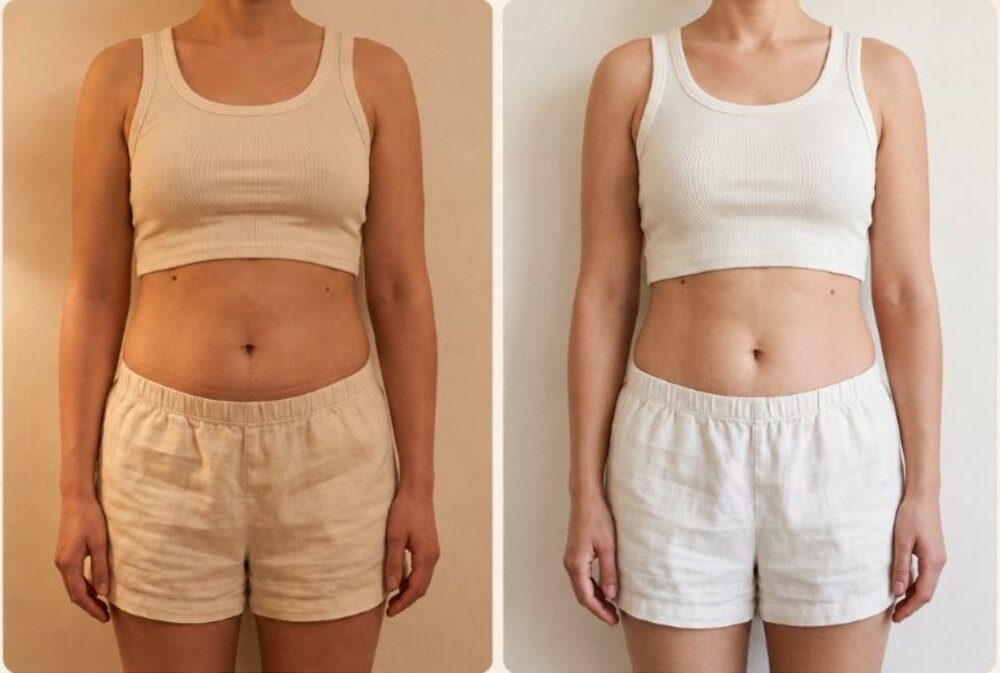 Week 1Week 3
None of these women are claiming dramatic weight loss. They're claiming something harder to put a number on — the moment they stopped pretending their body was the enemy. That's been my experience too.
Chapter SevenWhat a gastroenterologist had to say

Dr. Anna Reyes, MD
"Most patients I see for chronic bloating have already tried everything: probiotics, elimination diets, fiber. What I tell them is that the gut also responds to the rituals around digestion, not just the food itself. Topical herbal blends like mugwort, ginger, and cinnamon have a long, well-studied history in traditional Japanese practice for exactly this kind of evening discomfort."
That mattered to me. Not because a doctor is a magic stamp of approval, but because she put words to something I was already feeling — that the ritual itself was part of why this was working. Sticking on the patch every night was a moment of doing something for myself in a day that mostly involved doing things for everyone else.
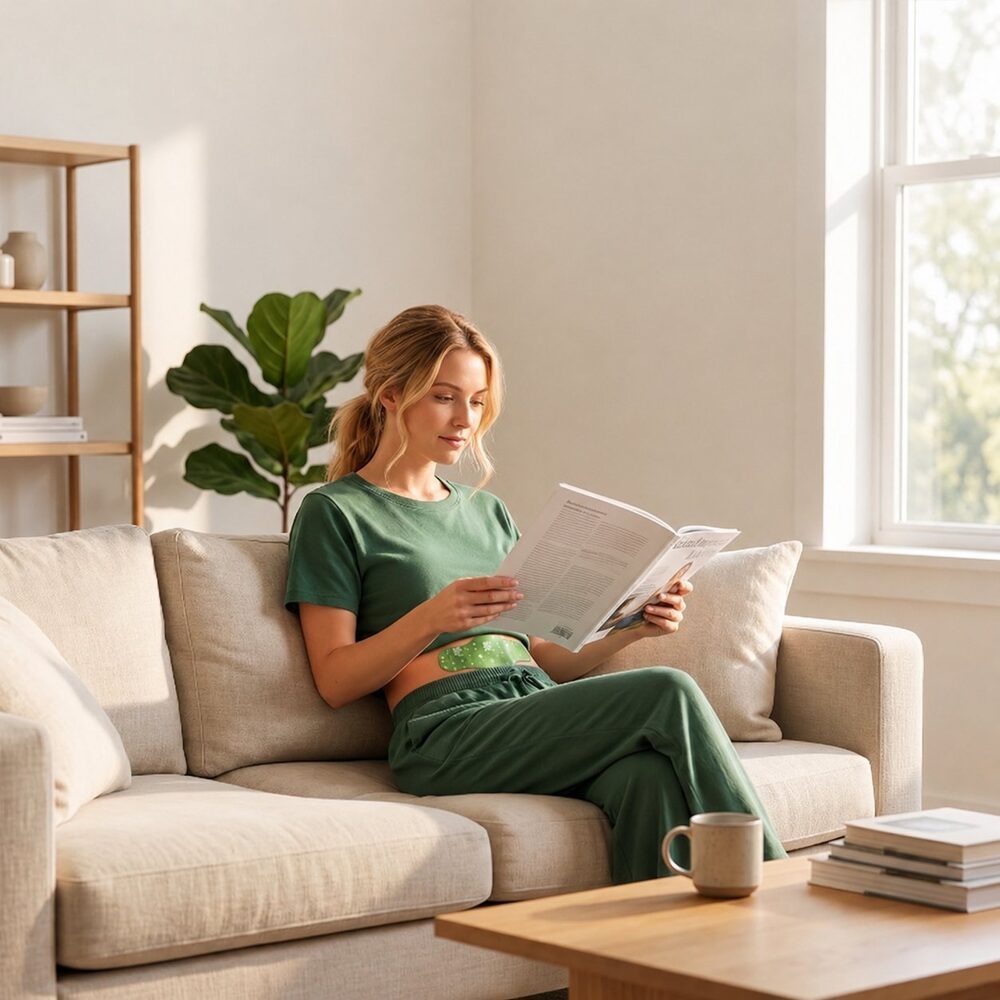
Chapter EightHow I'm actually using them (the nightly ritual)
After a couple of weeks of trial and error, here's the routine that's working for me:
Cleanse and dry your lower abdomen
Right before bed. Skin needs to be clean and completely dry — moisturizer or oils will keep the patch from sticking properly.
Peel and place
Peel the backing off, center the patch on or just below your belly button, smooth the edges down so the adhesive seals against your skin.
Wait for the warmth (about ten minutes)
You'll feel a gentle warming sensation. That's the patch activating. If you don't feel anything within twenty minutes, the patch may not be working properly — try another from the box.
Sleep on it
The patch stays on through the night. The adhesive is strong enough to handle tossing and turning, but gentle enough to peel off easily in the morning.
Notice your morning
This is the part that surprised me. By the third or fourth night, I started waking up with a flatter, lighter feeling in my stomach. My pants buttoned without the small tug I'd gotten used to.
That's the whole routine. Five minutes a night, one patch, no pills. The simplicity is honestly what made me stick with it. My nightly skincare takes longer than this.
Before I get to my honest verdict, I want to show you something. Because somewhere around week two, I sat at my kitchen table with a glass of wine and laid out everything I'd tried over the last six years next to this one little box of patches. And the math made me cry.
One Patch. Everything Else I'd Tried.
Six years, thousands of dollars, dozens of solutions. Here's what each one actually delivered.
- ✓Works overnight while you sleep — zero effort
- ✓You feel the warming sensation in ten minutes
- ✓$25 for a full box — less than dinner
- ✓Real Japanese herbal blend (mugwort, ginger, wormwood, cinnamon)
- ✓Nothing to swallow, mix, brew, or remember
- ✓30-night money-back guarantee
- ✓One small ritual. Five minutes a night.
- ✕Takes weeks to "maybe" feel a difference
- ✕You never actually know if it's working
- ✕$60–$1,500+ and counting
- ✕Mystery ingredients, marketing claims, no proof
- ✕Pills, powders, schedules, restrictions, guilt
- ✕"Final sale" — your money's gone if it fails
- ✕A new routine that takes over your life
Chapter NineHonest verdict — would I keep buying them?
I'm three boxes deep. I keep two backup boxes in my bathroom drawer. I bought my mom a box for Mother's Day and she texted me four days later asking where she could get more. So yes. I'm in.
But I want to be clear about what this is and what it isn't, because I'm tired of being lied to and I'm not going to do that to you.
It's not a magic patch. I haven't lost ten pounds. I haven't transformed my body. The number on the scale hasn't moved much. What's moved is everything around the number. The way I sit at my desk. The way I pick out clothes in the morning. The way I eat dinner. The way I laugh at things my husband says without immediately doing the math on whether laughing is going to make my stomach hurt. The way I let him put his arm around my waist instead of subtly shifting away because I didn't want him to feel how tight my jeans were. The way I caught my reflection in a window walking past a coffee shop last Wednesday and didn't immediately look away.
That's the part I can't put a price on. That's the part I don't think anyone will tell you about in a TikTok ad. The mirror stops being your enemy. Your own reflection stops being something you're bracing for.
It's not for everyone. The cheap, generic listings on Amazon — the ones with no warming sensation, no real adhesion, no instructions you can read — those are why this category has a bad reputation. If you buy one of those, you'll think herbal patches don't work. They do. You just have to buy a real one.
It is, for me, the first thing in six years that delivered. And I want to say something about that, because it matters. I am angry. I'm angry at every protocol that took my money and my hope. I'm angry at every product that promised me my body back and gave me a $89 jar of powder that tasted like grass. I'm angry at the version of me that spent six years apologizing to her own body for things her body wasn't doing wrong. I'm angry at how cheap this fix turned out to be — twenty-five dollars, the cost of a takeout dinner, when I'd spent thousands trying to fix what wasn't broken.
And I'm relieved. I'm so relieved I don't know what to do with myself sometimes. I sit at my desk at 4pm with my jeans button buttoned and I think this is what other people feel like, all the time, and they don't even know how lucky they are.
If you've been quietly losing the war with your own body — afternoon bloat, period cramps, that constant low-level tightness that women aren't really supposed to talk about — these are worth trying. Especially if, like me, you'd given up. Especially if you've been hoping and losing for so long that you've forgotten what hope even feels like. There's a 30-night money-back guarantee. The whole risk is twenty-five dollars and a phone call. The whole upside is your evenings back. Your mornings back. The version of yourself you stopped expecting to see in the mirror.
That's the math. I'd take it again. I have, three times. I will keep taking it.
And if you're sitting where I was sitting six weeks ago — exhausted, skeptical, quietly furious at your own body for letting you down — I just want you to know I see you. I was you. And I'm telling you the truth.
Disclosure: This article reflects the personal experience of Lauren Whitaker, a verified customer who has used the Uvyna Herbal Balance Patch. Individual results vary. The Daily Notebook may earn a commission if you purchase through links on this page, at no additional cost to you. This does not influence which products we cover or how we cover them. This product is not intended to diagnose, treat, cure, or prevent any disease. Consult a healthcare provider before use if you have sensitive skin, are pregnant, or are managing a medical condition.